
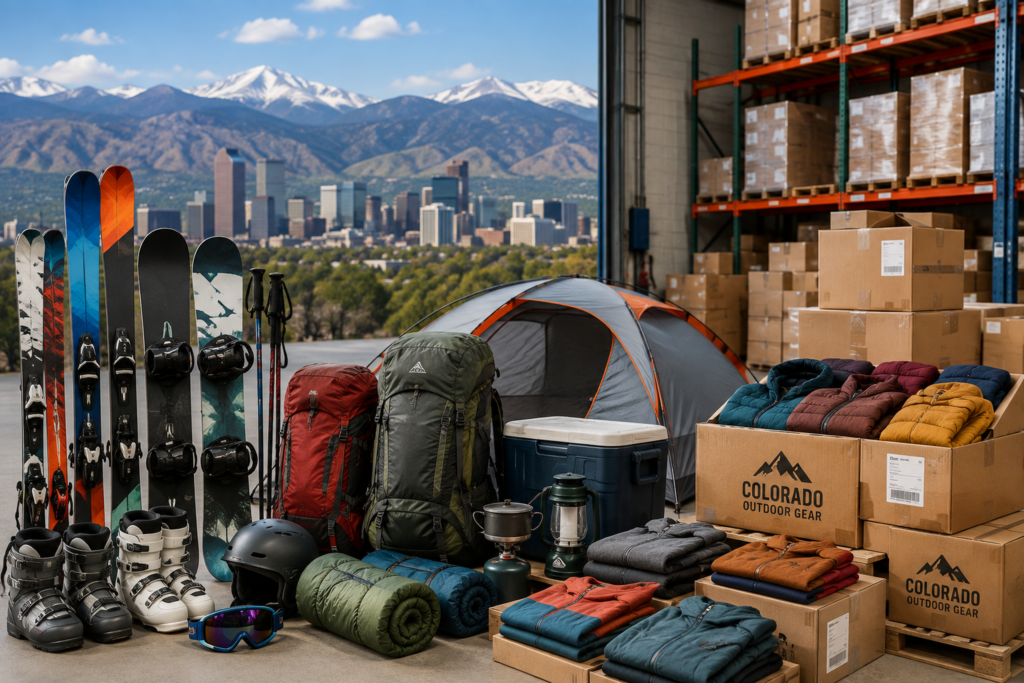
Colorado is one of the strongest outdoor recreation markets in the United States. From skiing and snowboarding to camping, hiking, climbing, cycling, fishing, running, and activewear, the state’s economy is deeply connected to outdoor and sporting goods.
That demand creates opportunity for brands, retailers, ecommerce sellers, distributors, and manufacturers. But it also creates a major inventory challenge: outdoor goods are highly seasonal.
When the snow season underperforms, ski and snowboard inventory can sit. When camping demand shifts, tents, backpacks, coolers, and outdoor accessories can pile up. When apparel trends change, activewear, outerwear, and performance clothing can become slow-moving stock.
For businesses searching for overstock buyers Colorado Denver outdoor goods surplus, the goal is usually simple: recover cash, clear space, and move inventory before it loses more value.
Colorado’s outdoor economy is large and active. The U.S. Bureau of Economic Analysis reported that outdoor recreation accounted for a major share of national economic activity in 2024, and Colorado was one of the leading states for outdoor recreation value added. Colorado’s outdoor recreation economy was also reported at about $18.1 billion in 2024, showing how important the sector is to the state.
In a market this active, surplus inventory is unavoidable. The key is knowing when to discount, hold, rechannel, or liquidate.
Why Colorado Creates Unique Outdoor Goods Overstock
Colorado’s outdoor market is different from many other states because recreation is not just seasonal retail. It is part of the culture, tourism economy, and lifestyle.
Denver, Boulder, Colorado Springs, Fort Collins, Vail, Aspen, Breckenridge, Steamboat Springs, Durango, and mountain communities all support outdoor retail demand. That means businesses often stock inventory for peak seasons, destination shoppers, local athletes, tourists, and ecommerce buyers.
Outdoor goods overstock can happen when:
- Winter snowfall is weaker than expected
- Ski season demand slows
- Camping products arrive late
- Apparel styles change
- Retailers over-order before peak season
- Ecommerce ads stop performing
- A product line is discontinued
- New models replace old gear
- Customer returns pile up
- Wholesale buyers cancel orders
- Seasonal forecasts are too aggressive
- Warehouse space is needed for next-season inventory
Outdoor and sporting goods can still have strong resale value, but timing matters. Last season’s ski equipment, camping gear, or activewear may be harder to move if businesses wait too long.
Denver’s Role in Outdoor and Sporting Goods Liquidation
Denver is a major hub for outdoor businesses because it connects urban retail, mountain recreation, logistics, ecommerce, and regional distribution. The metro area supports national chains, independent outdoor retailers, consignment shops, resale businesses, warehouses, ecommerce sellers, and specialty gear brands.
Denver’s outdoor retail ecosystem also shows how secondary channels can play a role in keeping gear moving. For example, local reporting has covered Denver-area outdoor gear resale and discount models, including shops that help move gear outside traditional retail channels.
For businesses with bulk outdoor surplus, the same concept applies at a B2B level. Instead of selling one jacket, tent, or pair of skis at a time, brands and distributors may need a buyer who can evaluate pallets, cartons, truckloads, or mixed lots.
That is where overstock liquidation becomes useful.
What Types of Outdoor Goods Can Be Liquidated?
Colorado businesses may need liquidation for many outdoor and sporting goods categories.
Examples include:
- Ski equipment
- Snowboards
- Ski boots
- Bindings
- Goggles and helmets
- Winter outerwear
- Camping tents
- Sleeping bags
- Backpacks
- Coolers
- Hiking accessories
- Climbing gear
- Fishing accessories
- Cycling accessories
- Fitness gear
- Activewear
- Base layers
- Jackets and fleece
- Gloves and hats
- Outdoor footwear
- Water bottles and hydration packs
- Patio and outdoor lifestyle goods
- Sporting goods overstock
- Customer returns
- Open-box gear
- Damaged-box outdoor products
The condition of the inventory matters. New overstock is usually easier to evaluate than mixed returns. However, returned or open-box goods can still have value if the product category, quantity, and condition are clear.
Ski Equipment Overstock: Why Timing Is Critical
Ski and snowboard inventory is one of the clearest examples of seasonal risk.
Demand is strongest before and during winter. Once the season ends, buyer urgency drops. If a retailer or distributor is still holding skis, snowboards, boots, helmets, goggles, gloves, or winter apparel after peak season, the inventory can quickly become harder to move.
Ski equipment overstock may happen because:
- Snowfall was weaker than expected
- A product line was over-ordered
- New models are replacing older inventory
- A retail location did not sell through
- Rental or demo inventory needs to be cleared
- E-commerce demand slowed
- Sizes or models sold unevenly
- Retailers are preparing for next season’s product lines
Recent Denver reporting noted that outdoor retailers were offering significant sales after a difficult winter left some businesses overstocked with unsold merchandise from the 2025–26 winter season.
That is exactly why outdoor brands should not wait until inventory becomes dead stock. If gear is out of season, overstocked, or about to be replaced by newer models, liquidation may recover cash faster than storing it for another year.
Camping Gear Overstock and Summer Seasonality
Camping gear has a different seasonal pattern. Demand often rises in spring and summer, with peak interest around warm-weather travel, hiking, festivals, and family outdoor trips.
Camping overstock may include:
- Tents
- Sleeping bags
- Camping pads
- Camp furniture
- Lanterns
- Coolers
- Stoves
- Backpacks
- Hiking poles
- Hammocks
- Water filtration products
- Camp cookware
- Outdoor storage products
If these items remain unsold after the summer season, businesses must decide whether to hold until next year or liquidate.
Holding may work for compact, evergreen products. But bulky goods such as tents, coolers, camp furniture, and large packs can take up costly warehouse space.
Liquidation may make more sense when the inventory is bulky, seasonal, discontinued, or blocking space for fall and winter goods.
Activewear and Outdoor Apparel Surplus
Activewear and outdoor apparel are especially sensitive to size, color, fit, and trend cycles.
A jacket may sell well in one color and poorly in another. A base layer may sell through in medium and large but leave broken size runs behind. A performance apparel brand may change fabrics, cuts, or seasonal colorways, making old inventory harder to sell at full value.
Outdoor apparel surplus may include:
- Jackets
- Fleece
- Base layers
- Hiking pants
- Performance tops
- Running apparel
- Yoga and fitness wear
- Socks
- Hats
- Gloves
- Rainwear
- Swim and water-sport apparel
- Branded activewear
- Returned apparel
Apparel can lose value when the season changes or size runs become incomplete. Bulk liquidation helps sellers move broken-size lots, discontinued collections, returns, and seasonal activewear before recovery value drops further.
Why Outdoor Goods Lose Value Over Time
Outdoor products can hold value better than some retail categories, but they are not immune to depreciation.
Value can decline because of:
- Seasonality
- Model-year changes
- New technology
- Updated designs
- Packaging damage
- Missing accessories
- Customer returns
- Product recalls or restrictions
- Broken size runs
- Retail markdown pressure
- Storage damage
- Demand shifts
For example, last year’s ski model may still be usable, but shoppers may expect a lower price once the new model arrives. A tent may still be new, but if packaging is damaged or a newer version is released, recovery value may decline.
This is why liquidation timing matters.
Liquidation vs. Discounting for Outdoor Goods
Outdoor brands often try discounts before liquidation. Discounts can work when inventory quantity is small and demand still exists.
Discounting may be the right move when:
- Products are still in season
- Inventory volume is manageable
- Margins can support markdowns
- The brand is not sensitive to public discounts
- The product can sell through quickly
- Retail partners are not affected
Liquidation may be better when:
- The season is ending or already over
- Products are bulky
- Inventory is available by pallet or truckload
- Styles or models are being replaced
- Public markdowns would hurt brand value
- Customer returns are mixed-condition
- Unit-by-unit resale would take too long
- Warehouse space is needed for next-season inventory
The best decision depends on product type, quantity, storage cost, and the urgency of cash recovery.
Channel Strategy for Denver Outdoor Goods Surplus
Not all outdoor surplus should move through the same channel.
A strong channel strategy may include:
Hold
Hold inventory that is compact, evergreen, and likely to sell next season without losing much value.
Discount
Discount small quantities that still have active demand.
Reallocate
Move inventory to stores, regions, or channels where demand remains stronger.
Liquidate
Liquidate bulky, seasonal, discontinued, returned, damaged-box, or slow-moving inventory that is no longer worth holding.
For brand-sensitive products, sellers may also need marketplace restrictions, geographic controls, or confidential handling.
How Overstock Buyers Evaluate Outdoor Goods
Overstock buyers typically evaluate outdoor goods based on:
- Product category
- Brand
- Quantity
- Condition
- Seasonality
- Model year
- Retail value
- Wholesale cost
- Pallet count
- Box count
- Photos
- Location
- Whether items are new, returned, open-box, or damaged-box
- Whether products are organized or mixed
- Any restrictions or safety concerns
For technical gear, include model numbers, sizes, compatibility details, and condition notes.
For apparel, include size and color breakdowns.
For ski and snowboard equipment, include model year, sizes, bindings, boots, and whether items are new, demo, returned, or used.
What Colorado Sellers Should Prepare Before Contacting a Buyer
To speed up the liquidation process, prepare:
- SKU list
- Product names
- Quantity by SKU
- Brand names
- Size and color breakdowns
- Product condition
- Photos
- Retail value
- Pallet count
- Box count
- Warehouse location
- Whether inventory is new or returned
- Whether gear is boxed or loose
- Any missing accessories
- Any resale restrictions
- Desired pickup timeline
Clear information helps buyers evaluate the lot faster and more accurately.
Businesses can start the process through the Liquidate Products or submit inventory directly using the Submit Your Inventory .
Why Bulk Liquidation Helps Outdoor Brands
Bulk liquidation helps outdoor brands and retailers avoid the slow process of selling one item at a time.
This can help businesses:
- Recover cash
- Clear warehouse space
- Move seasonal gear
- Reduce storage costs
- Handle customer returns
- Clear discontinued models
- Avoid deep public markdowns
- Prepare for next-season inventory
- Improve inventory turnover
- Reduce operational drag
For Colorado businesses, the timing can be especially important because outdoor retail follows strong seasonal cycles. Waiting too long can reduce recovery options.
When to Contact Colorado Overstock Buyers
Contact overstock buyers when inventory is no longer moving at the expected pace.
Good times include:
- After a weak snow season
- Before new ski models arrive
- After summer camping demand drops
- Before fall/winter inventory arrives
- After a product line is discontinued
- When customer returns pile up
- When a warehouse cleanout is needed
- When public discounts are not enough
- When gear is available by pallet or truckload
- When cash is needed for next-season purchasing
The earlier sellers review their inventory, the more control they have over recovery.
Final Thoughts
Colorado’s outdoor and sporting goods market is large, active, and highly seasonal. Denver-area brands, retailers, ecommerce sellers, and distributors may handle everything from ski equipment and snowboards to camping gear, activewear, outdoor apparel, cycling accessories, and sporting goods surplus.
When inventory stops moving, it can quickly become expensive to hold.
For businesses searching for overstock buyers Colorado Denver outdoor goods surplus, bulk liquidation can help recover cash, clear space, and move outdoor inventory before value drops further.
Whether the inventory includes ski equipment, camping gear, activewear, returned goods, discontinued models, or seasonal sporting goods, acting early can protect more value.
Ready to sell Colorado outdoor goods surplus, Denver sporting goods overstock, or seasonal equipment inventory? Visit Liquidate Products or submit your inventory through the Submit Your Inventory page to request a bulk liquidation quote.