
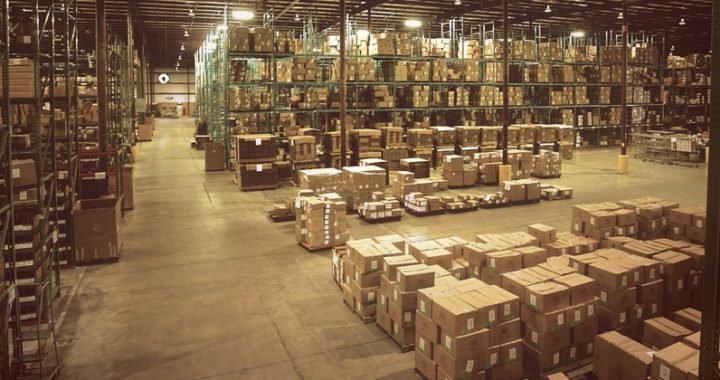
If you’re a Columbus importer staring at pallets that won’t fit the next inbound shipment, or a Cleveland manufacturer with a discontinued product line clogging your floor space, you already know the problem isn’t finding a market for your goods someday. It’s the rent check due this month on space that isn’t generating revenue. Ohio’s position as a logistics powerhouse means businesses here accumulate excess inventory faster than almost anywhere else in the country, and the same infrastructure that makes the state so good at moving goods in also makes the cost of letting them sit add up quickly.
That combination, world class distribution capacity paired with constant churn from importers, manufacturers, and retailers, is exactly why a healthy secondary market for bulk inventory has grown up around Columbus, Cleveland, and the corridor connecting them.
Why Ohio Generates So Much Excess Inventory?
Ohio’s logistics advantage isn’t marketing copy. Columbus sits within a one day truck drive of roughly 47 percent of the U.S. population and a third of Canada’s, a reach that few other inland metro areas can claim. That positioning is the entire reason Rickenbacker International Airport evolved from a former Air Force base into one of North America’s busiest cargo dedicated airports, anchoring Foreign Trade Zone 138, where between $10 billion and $25 billion worth of merchandise moved through in 2023 alone.
The flip side of being this efficient at bringing goods in is that businesses end up with more product than they can move when demand shifts, a shipment arrives late and gets superseded by the next one, or a retail partner cancels an order after the goods already cleared customs. Add in Ohio’s unusually diverse base of major employers, Procter & Gamble, Cardinal Health, Marathon Petroleum, Kroger, Goodyear, Sherwin-Williams, and Parker Hannifin among them, and you get overstock coming from nearly every category imaginable: consumer packaged goods, medical supplies, tires and rubber products, paint and coatings, industrial components, and general retail merchandise. A bulk buyer working this market has to be comfortable with variety, because Ohio doesn’t generate one type of surplus. It generates all of them.
Columbus and the Rickenbacker Corridor: A Market Too Tight to Hold Extra Stock
Central Ohio’s industrial real estate market closed 2025 with 8.8 million square feet of positive absorption, ranking among the top five markets in the country, and ended the year with vacancy down to 7.2 percent from 9.7 percent in 2024. In the Rickenbacker submarket specifically, demand has been driven by major logistics tenants. DHL Supply Chain signed a lease for more than 737,000 square feet, and Crane Worldwide Logistics took roughly 1.2 million square feet, both within the past year.
When a market tightens this fast, there’s no slack for businesses that need somewhere to put product that didn’t sell on schedule. Average asking rents in Columbus have held above $6.25 per square foot on a triple net basis for four straight years, and every additional month a pallet sits unsold in that environment is a real, calculable cost. Amazon’s presence at Rickenbacker, where the company runs an air cargo gateway and robotic fulfillment center employing more than 4,000 people, adds another layer: a huge volume of e-commerce overstock, customer returns, and aged FBA inventory moves through this corridor that needs a buyer who isn’t the platform itself.
The Big Lots Irony
There’s a detail buried in the Columbus industrial data that tells the whole story better than any statistic could. A single 3.8 million square foot distribution building at 300 to 550 Phillipi Road has been weighing down Columbus’s vacancy numbers since it emptied out. That building belonged to Big Lots, the closeout and overstock retailer founded in Columbus in 1967, the company that essentially invented the modern closeout retail model in this exact city. Big Lots filed for Chapter 11 bankruptcy in September 2024, and after a planned sale fell through, the company converted to Chapter 7 liquidation in November 2025, ending a business that once generated $6.19 billion in annual revenue before that figure fell 27 percent over four years.
The lesson for any Ohio business holding excess inventory isn’t subtle. The company that built its entire identity around buying and reselling other people’s surplus eventually became surplus itself, and it wasn’t able to move fast enough to avoid total liquidation. Speed and a clean exit channel matter more than brand size or industry experience. A pallet of unsold goods doesn’t care how established the company holding it is.
Cleveland’s Industrial Belt: A Different Kind of Overstock Market
Cleveland’s economy still runs on a manufacturing backbone that Columbus never had to the same degree, and that shows up in its industrial real estate. Vacancy sat at 6.3 percent in the first quarter of 2026, with average asking rents around $6.13 per square foot, both notably tighter than the national average even as the broader Northeast Ohio market has cooled somewhat after a construction boom tied to large projects like Ford’s $1.8 billion expansion in Avon Lake.
Northeast Ohio’s industrial heritage means a lot of the surplus moving through this region looks different from what comes out of Columbus. Instead of pure consumer goods and e-commerce returns, Cleveland area sellers are more likely to be sitting on discontinued manufacturing inputs, excess components from a line changeover, or inventory tied to a supplier relationship that ended. The Port of Cleveland, the third largest port on the Great Lakes by tonnage, moves roughly 13 million tons of cargo a year and supports more than 23,000 jobs, much of it raw materials and industrial goods rather than finished retail product, which reinforces just how much of the region’s excess inventory problem originates upstream in production rather than downstream in stores.
Who Actually Needs a Bulk Buyer in Ohio?
A few types of sellers show up again and again across the Columbus to Cleveland corridor.
Importers using Rickenbacker and FTZ 138 sometimes bring in container loads ahead of anticipated tariff changes or to lock in pricing, only to find demand softer than projected once the goods clear customs. Manufacturers tied to Ohio’s automotive, rubber, and consumer goods base regularly end up with discontinued SKUs, packaging changeovers, or components from a canceled program. Retailers working through store closures or footprint reductions, a pattern Ohio has seen play out repeatedly with chains based in or operating heavily through the state, need to clear fixtures and merchandise on a deadline tied to lease termination. E-commerce sellers operating out of the dense fulfillment network around Rickenbacker accumulate customer returns and aged inventory that Amazon’s long term storage fees make expensive to hold past the 181 day threshold. And direct to consumer brands, particularly in apparel and beauty, need a controlled resale channel that won’t undercut their own retail pricing or end up on a discount shelf next to their full price product.
The Carrying Cost Math Behind Every Liquidation Decision
The math that should drive a liquidation decision is straightforward once you run it. Take the Columbus market’s roughly $6.86 per square foot annual asking rent for industrial space and a modest 20,000 square foot footprint of unsold inventory. That’s over $11,000 a month in space cost alone, before labor, utilities, insurance, and the opportunity cost of not using that space for inventory that actually sells. In Cleveland, where rents have climbed from a 2025 average of $5.95 per square foot to $6.13 in early 2026, the math moves in the same direction even though the absolute numbers are slightly lower.
Every month that inventory sits unsold is a month that carrying cost compounds against whatever value the goods still hold. A bulk sale at a fraction of original cost, executed in days rather than months, often beats a slow trickle of discounted retail sales once you account for the warehouse rent, labor, and tied up capital involved in holding the goods.
How Selling Bulk Inventory in Ohio Actually Works
Liquidation buyers price offers based on the condition of what you’re selling, whether it’s new and sealed inventory, shelf pulls, customer returns, or salvage grade goods, and the more detail you can provide upfront, the faster and more accurate that offer will be. Sellers who come prepared with a clear, itemized manifest consistently get better offers and faster turnaround than those who show up with vague descriptions or estimated quantities. If you haven’t put together a manifest before, our free Excel manifest template with step-by-step guidance for liquidation sellers walks through exactly what buyers need to see, including SKU level detail, condition notes, and cost basis.
Once a buyer has your manifest, most Ohio deals close fast. There’s no need to wait for a storefront liquidation sale to trickle through inventory over months, and no need to accept pennies on the dollar from a consignment auction. A direct sale to a company that specializes in buying bulk lots can clear a warehouse in days, freeing up space and converting dead stock into cash you can redeploy.
Preparing Your Inventory for a Fast Sale
Before reaching out to buyers, pull together basic information: total unit counts by SKU, original cost or MSRP where available, condition category for each lot, and photos if the goods have any visible wear or packaging damage. Businesses near the Rickenbacker corridor or working through FTZ 138 should also note whether goods are still under bond, since that affects how quickly a buyer can take possession. Companies that buy bulk lots, like us, can typically turn a complete manifest into an offer within a day or two, and from there a deal can close before your next rent payment is even due.
If you’re sitting on excess inventory anywhere from Columbus to Cleveland, the fastest path forward starts with submitting your inventory for a free quote.