
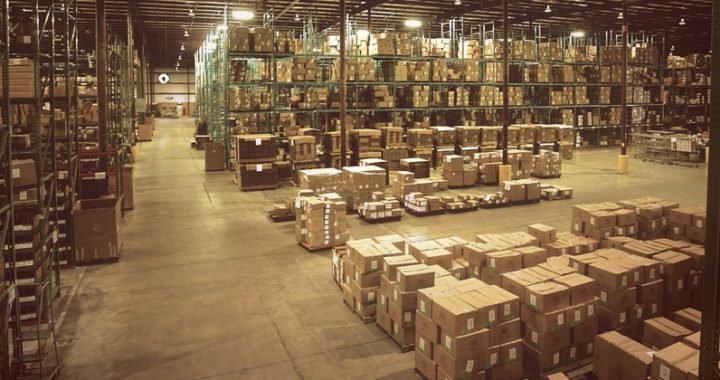
Your Inventory Is Costing You Money Every Day It Sits
Whether you’re a Pittsburgh manufacturer sitting on end-of-run industrial stock, a Philadelphia retailer with consumer goods that didn’t sell through, or a Lehigh Valley distributor with a warehouse section that needs clearing; the problem is the same.
Dead inventory ties up capital, burns storage costs, and gets in the way of the next purchase order. And in Pennsylvania’s industrial and retail economy, that problem is larger than most businesses realize until they run the numbers.
This guide is for Pennsylvania businesses ready to move excess inventory. We’ll cover what drives overstock in PA’s two major metros and the Lehigh Valley corridor, which categories have the most active buyers right now, and how to find the right buyer — fast — without leaving money on the table.
Why Pennsylvania Generates More Surplus Than Most States
Three specific forces are driving excess inventory in Pennsylvania right now:
Manufacturing overruns and end-of-line stock.
The Philadelphia Fed Manufacturing Index surged to 18.1 in March 2026 — its highest reading since September 2025 — driven by continued expansion in regional manufacturing activity. More production output means more exposure to overrun risk when orders don’t fully absorb production cycles.
Tariff-driven import overstock
Pennsylvania importers receiving through PhilaPort were among the businesses that front-loaded orders in 2025 to beat tariff escalations. PhilaPort set a throughput record in 2025 at 889,268 TEUs, a significant share of which was driven by this front-loading. The inventory that arrived at elevated costs is now sitting in Lehigh Valley and Philadelphia-area warehouses, priced above what the market will bear at full retail. Our tariff excess inventory guide covers this dynamic in detail.
Retail closures generating secondary market supply.
Pennsylvania has seen significant store closure activity from major chains in 2025-2026, adding a continuous stream of consumer goods, apparel, and home goods to the secondary market. The 2026 retail store closures post covers which chains are most affected nationally, many of which have significant Pennsylvania footprints.
Pennsylvania’s Liquidation Market by Region
Philadelphia: The Mid-Atlantic Distribution Hub
Philadelphia is the commercial core of Pennsylvania’s overstock market, and its logistics infrastructure makes it one of the most important secondary distribution hubs on the East Coast.
The city sits at the intersection of I-95, I-76, and I-476, with direct access to major Northeast markets. The Port of Philadelphia (PhilaPort) operates a 45-foot-deep shipping channel and is supported by Class I rail service through CSX and Norfolk Southern, enabling efficient intermodal freight movement.
Philadelphia’s location between New York City and Washington, DC gives businesses access to one of the densest consumer corridors in the United States. Nearly 46 million people live within a 200-mile radius of the city, making it a highly efficient regional distribution point.
That reach is exactly why Philadelphia-sourced inventory is attractive to secondary market buyers. Large volumes of surplus inventory are generated by e-commerce operators, 3PL providers, Mid-Atlantic retail distribution centers, healthcare-related businesses, and importers moving freight through PhilaPort.
Key warehouse submarkets include Northeast Philadelphia, South Philadelphia/Navy Yard, and the broader Southeastern Pennsylvania corridor across Chester, Delaware, and Montgomery counties.
Industrial warehouse rents in the Philadelphia market generally range between $9–$13 per square foot, according to recent market data from CommercialCafe and WareCRE Philadelphia Industrial Report. Lower costs compared to New York and Northern New Jersey make Pennsylvania attractive for warehousing, but carrying slow-moving inventory still creates significant holding costs over time.
The Lehigh Valley: Pennsylvania’s Warehouse Boom Market
If Philadelphia is the commercial hub, the Lehigh Valley is where much of Pennsylvania’s inventory is physically stored and distributed.
The Lehigh Valley — centered around Allentown, Bethlehem, and Easton — has grown into one of the Northeast’s largest industrial and logistics corridors, with more than 120 million square feet of industrial and warehouse space, according to the Lehigh Valley Commercial Real Estate Report. The region’s rapid expansion has been driven by its proximity to both New York City and Philadelphia, while offering lower operating costs than Northern New Jersey.
Major freight corridors including I-78 and I-81 connect the Lehigh Valley directly to the Port of New York and New Jersey and the broader Northeast distribution network. That strategic positioning has made the region a major fulfillment and distribution hub for national retailers, e-commerce operators, and importers.
Because of that scale, the Lehigh Valley also generates substantial volumes of overstock and closeout inventory — particularly full-pallet and truckload quantities of consumer goods, electronics, home products, and general merchandise that failed to sell through traditional retail channels.
For closeout buyers, the Lehigh Valley is especially attractive because inventory lots are typically large, organized, and easy to transport. The same infrastructure that supports high-volume distribution also makes liquidation logistics faster and more cost-efficient for both buyers and sellers.
Pittsburgh: Manufacturing Surplus and Industrial Closeouts
Pittsburgh’s overstock profile is fundamentally different from Philadelphia’s or the Lehigh Valley’s — and it requires a different type of buyer.
Pennsylvania became the nation’s leading iron and steel producer historically, and Pittsburgh remains home to major industrial companies including US Steel, PPG Industries, and Howmet Aerospace. The manufacturing economy that shaped Pittsburgh still drives the region’s surplus today, though the categories have shifted. End-of-production-run industrial components, obsolete MRO (maintenance, repair, and operations) supplies, manufacturing overruns, and facility consolidation goods are the dominant surplus categories in the Pittsburgh market.
The Philadelphia Fed Manufacturing Index — which covers the broader Pennsylvania-Delaware-New Jersey manufacturing region — rose to 18.1 in March 2026, but notably the inventories index remained positive, indicating that manufacturers are still holding elevated stock levels relative to historical norms. Elevated manufacturer inventories in an environment of ongoing cost pressure is exactly the condition that pushes surplus to market.
Pittsburgh’s overstock buyers need industrial category expertise and logistics capability to handle heavy or large-format goods. Consumer goods buyers who work primarily in retail categories are the wrong fit here. A national direct buyer with industrial category experience and Pittsburgh logistics reach is what most Pittsburgh businesses with manufacturing surplus actually need.
Central Pennsylvania and the I-81 Corridor
The Harrisburg-York-Lancaster corridor, running along I-81 and the Pennsylvania Turnpike, houses a significant distribution and light manufacturing base that’s less visible than Philadelphia or Pittsburgh but commercially substantial.
Professional inventory liquidators serving the Mid-Atlantic based out of York, PA serve businesses throughout South Central Pennsylvania, Maryland, Washington DC, Northern Virginia, Philadelphia, Harrisburg, and Delaware — reflecting how Central Pennsylvania functions as a hub for the broader Mid-Atlantic secondary market.
Food and grocery distribution, light manufacturing, and regional retail distribution are the primary surplus sources here. Businesses in this corridor have reasonable buyer access given the Lehigh Valley’s proximity and the I-78/I-81 logistics spine running through the region.
The Three Categories With the Most Active Pennsylvania Buyers
Industrial Goods and Manufacturing Components
Pennsylvania’s $112 billion manufacturing economy generates surplus in categories that most liquidators don’t handle well — and that makes specialized buyers valuable.
End-of-line components, MRO supplies, tooling, safety equipment, metal stock, and industrial hardware from Pittsburgh and Central Pennsylvania’s manufacturing corridor have an active buyer network among industrial redistributors, B2B secondary market operators, and export buyers serving Latin American and Eastern European markets where US-standard industrial components are in demand.
For sellers, the key is finding buyers with genuine industrial category experience — not generalists who will underprice industrial goods because they lack the distribution channels to move them profitably. Ask directly which industrial categories a buyer specializes in and what their redistribution channels look like for non-consumer goods.
Consumer Electronics and General Merchandise
Philadelphia’s I-95 corridor position and the Lehigh Valley’s massive warehouse infrastructure make Pennsylvania one of the East Coast’s most important consumer goods secondary markets.
PhilaPort reported record container volume in 2025, showing how much product can surge into the metro area quickly, creating receiving pressure and inventory accumulation at 3PL facilities throughout the region. Consumer electronics, tech accessories, home goods, and general merchandise that arrived ahead of tariff escalations and didn’t sell through at projected prices are the dominant consumer category surplus in the Pennsylvania market right now.
This is also the category where Pennsylvania’s location creates real buyer advantages. With nearly half the US population within a day’s drive, buyers who acquire Pennsylvania consumer goods inventory can efficiently redistribute to secondary retail channels across the entire Northeast and Mid-Atlantic — which is why Philadelphia-area consumer goods typically achieve better recovery rates than the same goods liquidated from more remote markets.
Healthcare and Medical Supplies (Non-Clinical)
Pennsylvania’s healthcare economy is enormous — anchored by major health systems in Philadelphia (Penn Medicine, Jefferson Health, Temple Health), Pittsburgh (UPMC, Allegheny Health Network), and a network of hospital systems across the state. This creates a category of surplus unique to Pennsylvania’s specific economic mix.
Many healthcare facilities lack real-time tracking systems, resulting in overstocking of vital supplies. Inefficient inventory management wastes resources on expired items and creates surplus that must be disposed of or sold. When hospital systems consolidate, rebrand, or change supply contracts — all of which happen continuously in Pennsylvania’s large and competitive health system market — non-clinical medical supplies, PPE, facility goods, and OTC health products enter the secondary market.
In 2025, tariffs on Chinese imports threatened to increase medical supply costs by at least 15%, causing health systems to build inventory buffers that, in many cases, exceeded actual consumption rates. That inventory build-up created overstock in PPE, non-clinical supplies, and health and wellness products that is now working through the secondary market.
This category requires buyers with appropriate handling capability and compliance awareness. Non-clinical supplies (PPE, facility goods, OTC products) move through standard secondary market channels. Clinical or regulated goods require specialized buyers — confirm compliance requirements before engaging any buyer for healthcare-adjacent inventory.
What to Look for in a Pennsylvania Bulk Inventory Buyer
State-level geographic coverage. Pennsylvania is a large state with very different commercial environments in Philadelphia, the Lehigh Valley, Pittsburgh, and Central PA. A buyer who operates efficiently in Philadelphia may not have logistics relationships in Pittsburgh. Confirm that your buyer covers your specific location before going further.
Category match. Industrial surplus from Pittsburgh and consumer goods surplus from Philadelphia require different buyer networks. A buyer who primarily handles retail consumer goods will underprice industrial components. Ask specifically about your product category and what redistribution channels they use for it.
Direct purchase capability. Given that Pennsylvania inventory is often in large-format distribution facilities with real carrying costs, a buyer who can commit, close, and coordinate pickup quickly is worth more than one with marginally better pricing but a slow process. For most Pennsylvania businesses, a direct purchase offer that closes within a week beats a consignment arrangement that drags for months.
Mid-Atlantic logistics reach. The best buyers for Pennsylvania inventory have redistribution reach across the entire Mid-Atlantic and Northeast — not just within the state. Pennsylvania’s geographic position means inventory leaving PA can reach buyers in New York, New Jersey, Maryland, Virginia, and DC within a truck day, which is a significant advantage that experienced buyers leverage.
Practical Steps: How to Move Pennsylvania Overstock Fast
Step 1 — Calculate your real carrying cost. At $9.47 per square foot in the Philadelphia metro, 5,000 square feet of overstock costs roughly $47,350 per year just in rent. Make that number concrete before deciding how urgently to act.
Step 2 — Build your inventory manifest. A detailed manifest — SKUs, quantities, conditions, and MSRP — is what gets you a fast, competitive offer. Without it, buyers slow down or pass. Use our free Excel manifest template to build one in the format buyers need.
Step 3 — Separate industrial from consumer goods. If you have both, present them separately. They have different buyer markets and different recovery rates. A combined lot typically gets priced at the lower-value category’s rate.
Step 4 — Submit and act on a timeline that preserves value. Bulk Inventory Buyers for Pennsylvania are active right now. First movers in a surplus market consistently recover more than those who hold and hope conditions improve.
Submit your Pennsylvania inventory for a free evaluation at LiquidateProducts— we respond within 24 hours with a direct offer.
LiquidateProducts: Buying Across Pennsylvania
LiquidateProducts purchases bulk overstock, closeout, and excess inventory directly from Pennsylvania businesses — Philadelphia, the Lehigh Valley, Pittsburgh, Harrisburg, Allentown, Erie, and surrounding markets.
We buy consumer goods, electronics, home goods, industrial supplies, apparel, health and beauty, and general merchandise. Our process is direct: submit your inventory, receive a market-rate offer within 24 hours, and we coordinate pickup logistics.
If you’re an Amazon FBA seller with inventory in Pennsylvania fulfillment centers and facing aged inventory surcharges, our Amazon FBA liquidation guide explains how to direct removal orders to our facility and stop fees from accruing immediately.
Get a free inventory evaluation here.
Frequently Asked Questions
Do Pennsylvania bulk inventory buyers serve both Philadelphia and Pittsburgh? Some do, many don’t. Pennsylvania is a large state with distinct commercial environments in each metro. Always confirm geographic coverage explicitly before engaging a buyer. LiquidateProducts.com serves the full state, including both metros and the Lehigh Valley corridor.
What’s the best way to liquidate manufacturing surplus in Pittsburgh? Industrial surplus requires buyers with category-specific expertise and redistribution channels for MRO supplies, components, and industrial goods. Ask any buyer you engage what their industrial redistribution network looks like — a generalist buyer without industrial channels will offer significantly less than a specialist.
Is the Lehigh Valley a good market for closeout buyers? Yes — it’s one of the most active secondary market corridors on the East Coast. The concentration of large-format distribution facilities means lots tend to be large and well-organized, which buyers value. Recovery rates for consumer goods in the Lehigh Valley market are competitive with any Northeast market.
How does PhilaPort’s record 2025 volume affect the local overstock market? Record container volume drove significant inventory frontloading by importers trying to beat tariff escalations. Much of that inventory is still working through the market at elevated cost bases that make full-retail sale difficult. This is contributing directly to consumer goods overstock across the Philadelphia and Lehigh Valley markets right now.
Can I liquidate FBA inventory in a Pennsylvania fulfillment center? Yes. Create a removal order in Seller Central directing Amazon to our receiving address. The full process is covered in our Amazon FBA liquidation guide.
Conclusion
Pennsylvania’s commercial diversity — heavy manufacturing in Pittsburgh, massive distribution infrastructure in the Lehigh Valley, dense retail in Philadelphia, and a healthcare economy that generates its own surplus category — makes it one of the most active secondary markets in the country. The inventory is here, the buyers are active, and the logistics infrastructure that makes Pennsylvania a great distribution hub also makes it easy to move surplus quickly.
The businesses that manage overstock well in Pennsylvania are the ones who treat it as a planning issue rather than an emergency. Having a buyer relationship, a clean manifest, and a realistic sense of your carrying cost before surplus accumulates puts you in a position to act fast when inventory stops moving.
Submit your Pennsylvania inventory for a free evaluation at LiquidateProducts.com and get a direct market-rate offer within 24 hours.