
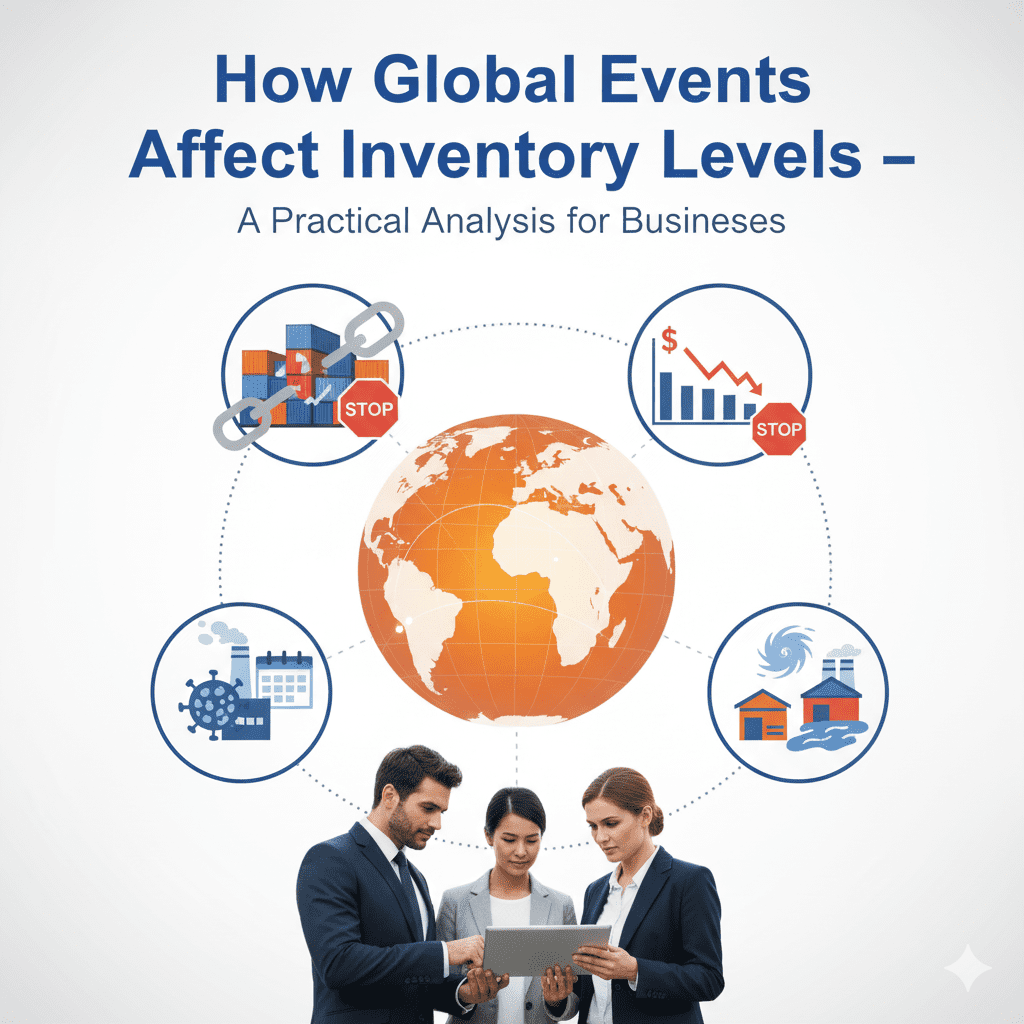
Today in the interconnected global economy, how global events affect inventory levels is no longer an academic question. When global events hit, inventory levels are often the first to feel the impact. Whether it’s a pandemic halting production, a war restricting trade routes, or inflation squeezing margins inventory is the shock absorber of global chaos.
For companies worldwide including those working with excess or closeout products understanding how global events affect inventory levels is essential to survival.
This article explores the real-world external factors that affect inventory levels and how business can appear, protect, and profit in unpredictable times.
Major Global Events That influence Inventory Levels
1. Pandemics and Global Health Emergencies
The COVID-19 crisis was one of the biggest lessons in the global supply chain history. Factories shut down, shipping routes collapsed, and consumer behavior changed overnight.
- Short-term effect: companies ran out of essential goods and panic buying.
- Long-term effect: Overstock of non-essential items post-crisis.
- The bullship effect caused small changes in demand to grow into large swings in supply order.
2. Geopolitical Conflicts and Trade Wars
Trade restrictions, sanctions, and political instability can delay or completely block cross-border logistics. Example: The U.S.–China trade war raised tariffs on imports, forcing companies to find new suppliers.
- Import costs rise due to tariffs
- Shipping routes are delayed to canceled
- Businesses are forced to find new suppliers in different countries
These political shifts make it essential to diversify supply chains. Relying on one region is risky in today’s world.
3. Natural Disasters and Climate Change
Floods, earthquakes, hurricanes, and wildfires have become more frequent and destructive. These environmental shocks directly affect production and logistics routes.
- Supply chain interruptions cause both delays and overstock accumulation when shipments can’t move.
- Warehouses and ports near disaster zones become bottlenecks.
- Extreme weather increases costs and delivery times
Being the Bulk Inventory Buyer, we often help businesses liquidate stock stuck due to such disruptions.
4. Infrastructure and Port Disruptions
Ports, highways, and railways keep the world’s goods moving, from fresh oranges on a truck to steel coils rumbling down the tracks. If strikes, overcrowded routes, or sudden accidents block any of these, the entire supply chain grinds to a crawl—like trucks idling in a long line under the hot sun.
- Suez Canal blockages can delay global shipments by weeks.
- Port worker strikes affect unloading schedules and increase demurrage costs.
- A lack of warehouse capacity can lead to inventory overflow.
Using real-time tracking tools and alternative logistics partners can help prevent long delays.
5. Technological Failures and Cyberattacks
With digitalized logistics systems, a single cyberattack can paralyze entire supply networks.
- A cyber attack can disable warehouse or tracking system
- Recovery takes time and leads to delayed deliveries or missed order.
- Companies with no manual backup systems faced data loss and shipment chaos.
These incidents highlight why resilient, transparent supply chain systems matter for inventory control.
How These Events Influence Inventory Behavior
Let’s break down the typical inventory patterns businesses experience during global discription.
| Type of Event | Supply Chain Impact | Inventory Effect | Example |
| Pandemic | Factory shutdowns | Shortages, then excess stock | COVID-19 |
| Trade War | Tariff hikes | High cost of imports | US-China conflict |
| Inflation | Reduced demand | Overstock of luxury goods | 2022-2023 |
| Natural Disaster | Port/route closures | Delayed shipments | Panama Canal drought |
| Cyberattack | Data/system loss | Stock mismanagement | Maersk 2017 attack |
Smart Strategies to Reduce Risk
Businesses cannot control global events but they can control how they respond. To withstand the chaos, forward-thinking companies adopt adaptive inventory strategies.
Diversify Suppliers
Don’t rely on a single supplier or just one region—if a storm knocks out the port, you’re stuck. Line up more than one supply source, so when one runs dry, you’re not left staring at empty shelves.
Keep Smart Safety Stock
Use data-driven safety stock levels based on real demand and risk. Don’t hold too much or too little.
Improve Supply Chain Visibility
Choose software that tracks your shipments and spots delays before they happen—like seeing a red warning light flash on a dashboard. Seeing things as they happen cuts down on nasty surprises—like catching a problem before it snowballs.
Flexible Logistics
Have alternative shipping routes ready (for example, sea + air freight options).
Collaborate with Partners
Work closely with suppliers and logistics providers. Sharing data helps everyone react faster.
Build a Liquidation Strategy
When demand drops and inventory builds up, liquidation helps convert stock into cash quickly. Professional liquidation Experts can help your business recover losses during uncertain times.
Why Liquidation Is a Smart Risk Management Tool
When businesses face sudden demand collapse or supply overshoot, liquidation is not failure — it’s financial flexibility.
Selling excess or obsolete inventory:
- Frees up warehouse space
- Converts dead stock into cash
- Improves balance sheet liquidity
- Reduces storage and depreciation losses
That’s where a trusted bulk and excess Inventory Buyers like Liquidate Products becomes essential — turning disruption into opportunity.
Strong Points to Remember
- Global events always directly affect supply chain ripples.
- Balancing stock levels protects profits.
- Liquidation helps you recover value during downturns.
- Flexible logistics and forecasting tools build resilience.
- Collaboration across partners shortens recovery time.
FAQs
Q1. What are the most common global events that affect inventory levels?
Pandemics, natural disasters, trade wars, inflation, and geopolitical conflicts are the top five disruptors.
Q2. How can I protect my business from inventory volatility?
Use multi-sourcing, predictive analytics, and a fast liquidation partner like LiquidateProducts.com.
Q3. What industries are most at risk?
Retail, consumer electronics, and manufacturing sectors are highly sensitive to global shocks.
Q4. Should small businesses also prepare for global disruptions?
Absolutely. Even small businesses depend on global suppliers — proactive planning reduces long-term costs.
Q5. How does liquidation support sustainability?
Liquidating excess products prevents waste, extends product life cycles, and promotes circular economy practices.
Conclusion: Adapt, Liquidate, and Grow
Inventory levels inevitably shift with global events — it’s the steady hum beneath modern trade. Companies that move fast, weigh the risks, and make sharp decisions will not just survive—they’ll flourish, like a shop that spots a storm coming and bolts its windows before the wind hits.
Instead of letting unsold goods drain your cash flow, consider strategic liquidation as part of your business continuity plan.
Visit LiquidateProducts today to explore how we can help you manage overstock, recover capital, and stay ahead in a volatile global market.